

Is CBD Safe? CBD Safety Guide


If you're curious about CBD, one of the first questions you'll probably ask is:
"Is CBD safe?"
It's a fair question.
Over the years, we've helped hundreds of customers explore CBD products for stress management, sleep support, recovery, pain and discomfort, general wellness, and focus using our simple CBD safety guide. In that time, we've found that most people aren't looking for a sales pitch—they simply want honest information so they can make an informed decision.
The good news is that for most healthy adults, CBD is generally considered well-tolerated when used as directed and sourced from a reputable company.
However, product quality, proper use, and realistic expectations all play an important role in safety.
My Honest Opinion on CBD Safety
Generally speaking, I consider CBD to be safe for most adults when used as directed.
Most customers who use CBD as part of their wellness routine tolerate it very well. Like any supplement, individual responses can vary. Some people notice benefits quickly, while others need time to determine the serving size and routine that works best for them.
My advice is simple:
Start low, go slow, and pay attention to how your body responds.
CBD is not a pharmaceutical drug, and taking more isn't necessarily better.

Who Should Speak With a Healthcare Professional First? Guide to CBD Safety
While CBD may be appropriate for many people, certain individuals should speak with a healthcare professional before using it.
This includes people who are:
Pregnant or breastfeeding
Taking prescription medications
Managing a serious medical condition
Concerned about potential medication interactions
CBD may affect how certain medications are metabolized, which is why professional guidance is important when medications are involved.
Whenever a customer has questions about medications or medical conditions, we encourage them to speak with their healthcare provider.

The Most Common CBD Safety Concerns
After helping hundreds of customers, certain questions come up repeatedly.
Will CBD Make Me Sleepy?
Some people worry that CBD will make them tired or interfere with daytime activities.
While CBD is generally non-intoxicating, some individuals report feeling more relaxed or occasionally drowsy, particularly at larger serving sizes.
This is one reason we encourage people to start with a lower amount and adjust gradually.
Will CBD Interact With My Medications?
This is one of the most important questions we receive.
CBD may interact with certain medications, which is why anyone taking prescription medications should consult a healthcare professional before using CBD.
Can CBD Cause Digestive Upset?
A small number of people report mild digestive discomfort such as:
Nausea
Diarrhea
Changes in appetite
These effects are generally uncommon and may improve by adjusting the serving size or changing product formats.
Will CBD Show Up on a Drug Test?
This is one of the most frequently discussed topics.
CBD itself is not typically screened for in workplace drug testing. However, some hemp-derived products may contain trace amounts of THC.
Customers who undergo workplace or athletic drug testing often prefer THC-free CBD isolate products to minimize THC exposure.
It's always important to review product testing information and understand workplace policies.
Will CBD Make Me Feel High?
Many first-time users assume CBD produces the same effects as THC.
CBD is non-intoxicating and does not create the euphoric "high" associated with THC.
Most customers describe the experience as subtle rather than dramatic.
Why Product Quality Matters
If there's one thing I've learned, it's that CBD safety isn't just about CBD itself.
It's also about product quality.
Not all CBD products are created equal.
Poor-quality products may contain:
Inaccurate CBD levels
Undisclosed ingredients
Inconsistent cannabinoid content
Unwanted contaminants
That's why I often tell customers:
Where you buy your CBD matters just as much as the CBD itself.

My CBD Safety Checklist
Before using any CBD product, I recommend checking for:
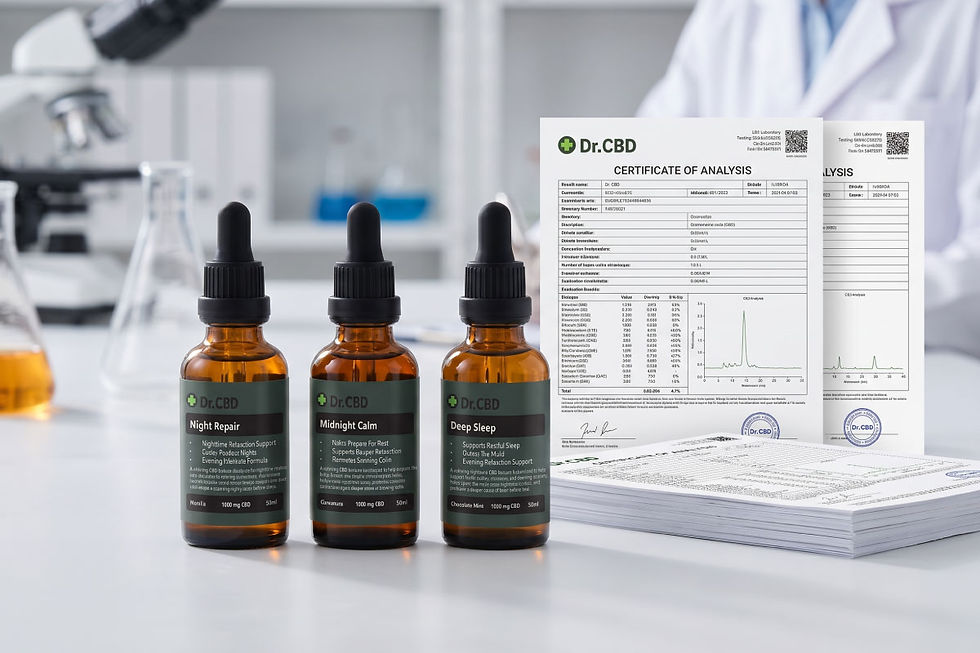
1. Third-Party Lab Testing
Independent testing helps verify product quality and cannabinoid content.
2. Clearly Labeled CBD Content
You should know exactly how much CBD you're taking.
3. Transparent Ingredient Lists
Every ingredient should be clearly disclosed.
4. THC Content Disclosure
Customers deserve to know whether a product contains THC and how much.
5. Canadian Manufacturing
Many customers appreciate Canadian-made products because of their quality standards and transparency.
6. Batch Testing
Batch testing helps ensure consistency from one production run to the next.
7. Start Low and Go Slow
Responsible use begins with conservative serving sizes.
8. Consult a Healthcare Professional When Appropriate
Particularly if medications or health conditions are involved.
CBD Isolate vs. THC: Which Is Safer?
This is a question we receive regularly.
The answer depends largely on the individual.
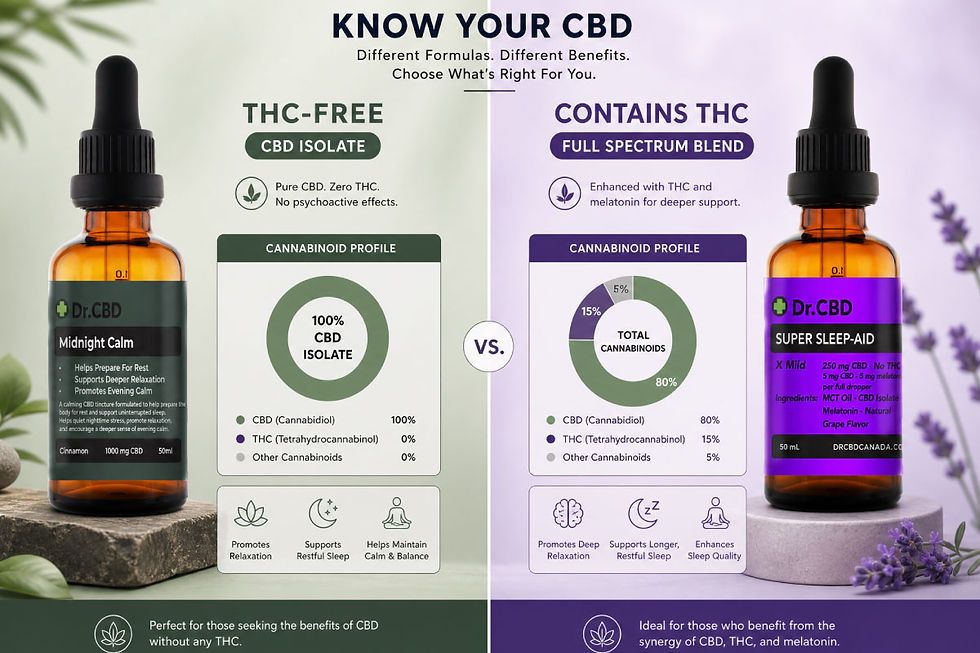
THC-Free CBD Products
For many people, THC-free CBD products are an excellent starting point.
These products are often preferred by:
First-time users
Individuals sensitive to THC
People concerned about workplace drug testing
Customers seeking non-intoxicating options
Products Containing THC
Some customers specifically seek products that contain THC because they believe the combination of cannabinoids provides a more comprehensive experience.
Some people report that THC contributes to feelings of relaxation and comfort.
However, THC-containing products are generally best suited for people who understand how THC affects them and are comfortable with its presence.
My Advice
When customers aren't sure which option is right for them, I ask:
Do you currently use THC?
Do you enjoy THC?
Are you specifically looking to avoid THC?
What are your wellness goals?
There isn't one universal answer.
The right product depends on the individual.

Real Customer Experiences
The Nervous First-Time User
We've spoken with many customers who were initially nervous about trying CBD.
Once they learned about third-party testing, ingredient transparency, and responsible serving sizes, they felt much more confident in their decision.
Switching to a Higher-Quality Product
Some customers have switched from lower-quality products and reported feeling more comfortable knowing exactly what they were taking.
Transparency often increases confidence.
Taking Too Much Too Soon
We've also seen customers who initially used larger serving sizes than necessary.
After reducing their serving amount and taking a more gradual approach, many reported a better overall experience.
Can You Take CBD Every Day?
Many customers do.
Daily use is common among people seeking support for:
General wellness
Stress management
Recovery
Sleep routines
Maintaining balance throughout the day
For most healthy adults, daily use may be a reasonable approach when used as directed and sourced from a reputable company.
Many long-term users describe CBD as one component of a broader wellness lifestyle that includes:
Exercise
Nutrition
Quality sleep
Stress management
Healthy daily habits
Common CBD Myths
Myth: CBD Is The Same As THC
CBD and THC are different cannabinoids with different effects.
Myth: More CBD Is Better
Higher amounts don't automatically produce better outcomes.
Myth: CBD Is A Miracle Cure
CBD is not a cure-all, and results vary from person to person.
Myth: All CBD Products Are The Same
Product quality, formulation, ingredients, and testing standards vary significantly.
Final Thoughts
If someone walked into our store and said:
"I'm interested in CBD, but honestly, I'm nervous about whether it's safe."
My response would be simple:
"That's a very reasonable question, and you're not alone."
For most healthy adults, CBD is generally considered well-tolerated when used responsibly and purchased from a reputable company.
The key is choosing quality products, understanding what you're taking, starting slowly, and asking questions.
We've helped hundreds of customers navigate CBD by focusing on education rather than exaggerated claims. Our goal isn't to convince someone to use CBD—it's to help them make an informed decision that feels right for them.
When people prioritize quality, transparency, and realistic expectations, they often feel much more confident exploring CBD for the first time.



Comments